

…Weather radars allegedly awaiting servicing, critical visibility equipment allegedly neglected as questions mount over management of Chinua Achebe International Cargo Airport, Umueri
GMA AVIATION DESK, SEPTEMBER 2026
UMUERI, ANAMBRA STATE — Fresh concerns have emerged over the management of the Chinua Achebe International Cargo Airport (CAIA), Umueri, following an intelligence report which alleges that critical meteorological and aviation-support equipment at the airport required urgent servicing or installation, with reported concerns allegedly brought to the attention of the airport’s Managing Director, Mr. Martins Emeka Nwafor, without the required action being taken.
African Writers Centre’s recent investigations point to disturbing allegations that paint a picture of aviation-support equipment reportedly requiring attention at a facility that serves one of Nigeria’s most commercially active states.
These allegations have not been independently adjudicated by a court or publicly confirmed by the Anambra State Government, Mr. Nwafor or the relevant aviation agencies. They are, however, serious enough to demand an urgent and independent technical investigation.
WEATHER RADARS REPORTEDLY NEED SERVICING
According to the allegations, information obtained from the Head of the Nigerian Meteorological Agency (NiMet) department at the airport, identified as Osita O. Ameh, indicated that most of the weather radar equipment used to monitor hazardous weather conditions required servicing.
The report states that the concerns had allegedly been communicated to Mr. Nwafor but that, as of the time of the report, no action had reportedly been taken to service the affected equipment or provide replacements.
Weather information is a fundamental component of safe flight operations. Pilots, airlines and air-traffic services depend on reliable and accurate meteorological information to assess conditions before and during flight operations.
When equipment responsible for generating or supporting critical weather observations is unreliable, aviation authorities must ensure that appropriate operational procedures, maintenance arrangements and approved backup systems are in place.
The question arising from the investigations is therefore urgent:
If equipment supporting weather observation at the airport required servicing, what action was taken to ensure that safe and reliable meteorological information remained continuously available to flight operations?
That question requires an answer from both airport management and the relevant aviation agencies.
CEILOMETER SAID TO HAVE BEEN LEFT UNINSTALLED
The report raises another concern about a ceilometer, an instrument used to measure cloud-base height and vertical visibility, information that can be important to aviation operations, particularly during adverse weather and low-visibility conditions.
According to the investigative report available to AWC, a ceilometer had reportedly been brought to the airport for installation around the control tower area but had allegedly remained uninstalled for an extended period.
The report claims that concerns were raised that prolonged failure to install the equipment could expose it to deterioration or technical problems before eventual installation and calibration.
If confirmed, the issue would raise serious questions about asset management.
A critical aviation-support instrument is of no value when it is purchased or delivered but allowed to remain idle, uninstalled and unavailable for operational use.
The Anambra State Government and relevant aviation regulators should establish whether the equipment was delivered, when it was delivered, why it was not installed immediately, its present condition and whether it is now operational and properly calibrated.
VISIBILITY EQUIPMENT ALSO REPORTEDLY IN NEED OF ATTENTION
The investigative report further alleges that a transmissometer, equipment used to measure atmospheric transparency and provide information relating to visibility conditions was operating below optimal capacity and required servicing.
The report describes the equipment as providing information relevant to prevailing runway visibility. In aviation, visibility information can be critical to operational decision-making.
The report also gave hope that “the current situation does not mean that every equipment fault automatically renders an airport unsafe; aviation operations are governed by multiple systems, redundancy arrangements, procedures and regulatory restrictions.
“But it does mean that any reported degradation in critical aviation-support equipment must be properly assessed, rectified and, where necessary, accompanied by operational limitations until full functionality is restored. Aviation safety is not an area where managers should gamble with maintenance delays,” said the report.
ACCESS AND MAINTENANCE CONCERNS
According to the document, the Head of the NiMet department also reportedly identified the need for an access pathway to enable personnel reach the relevant equipment for maintenance and servicing.
The report claims that, after allegedly discussing the concerns with the airport’s Managing Director without obtaining a satisfactory response, the NiMet official indicated an intention to escalate the matter to the agency’s headquarters to seek an urgent solution.
The document warned that the situation could worsen if urgent action was not taken. It further characterized Mr. Nwafor’s alleged response to the concerns as nonchalant and insufficiently responsive to the operational difficulties faced by meteorological personnel.
The reported advised that Mr. Nwafor should be given a full opportunity to respond to these allegations and provide evidence of any action taken after the concerns were reportedly brought to his attention.
THE BIGGER DANGER: WHEN MAINTENANCE FAILURE BECOMES A MANAGEMENT CULTURE
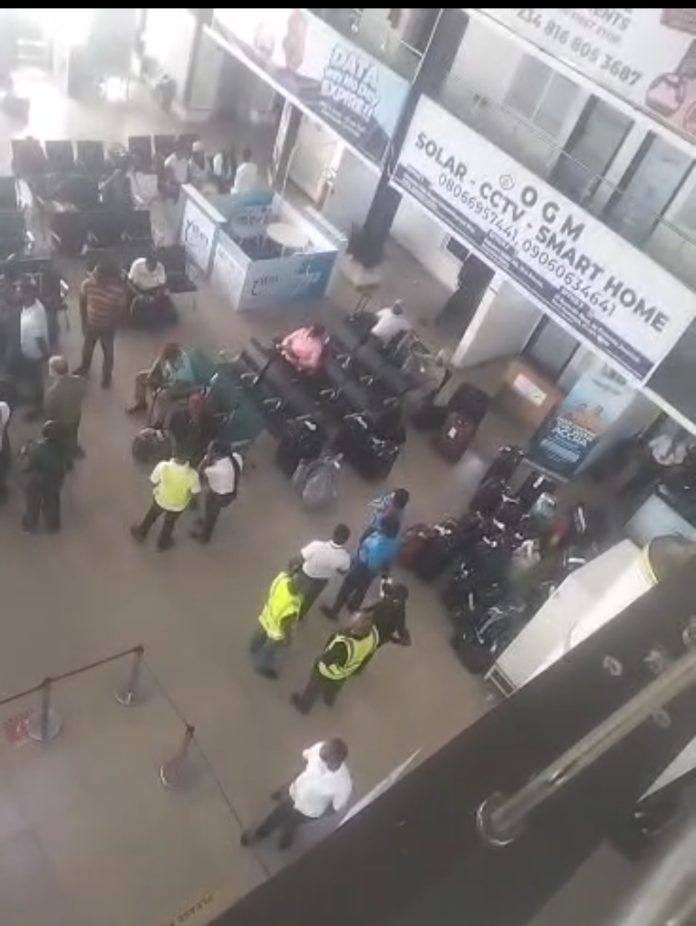
Taken alongside the more recent runway-lighting failure that disrupted flight operations and stranded passengers at Umueri, the investigative report raises a broader and deeply troubling question about whether there is a developing culture of delayed maintenance and inadequate management of critical infrastructure at the airport.
The issue is no longer simply whether one generator failed on one night. The emerging concern is whether warning signs were repeatedly ignored until systems failed at the point when they were most needed. An airport is a complex safety environment; and all levels of safeguards should not be allowed to fail, maintained the report.
Continuing, the report stressed that “Runway lighting, power supply, weather observation, visibility measurement, navigation systems, communication facilities, emergency services and trained personnel must operate within clearly defined safety and regulatory frameworks.
“A failure in one area may be manageable through approved contingency procedures. But when reports of problems begin appearing across several critical areas, the authorities must determine whether those incidents are isolated, or evidence of a systemic maintenance failure. That distinction could have profound consequences for aviation safety.”
SOLUDO GOVERNMENT MUST NOT WAIT FOR A TRAGEDY
Continuing, the report stated that “The Governor of Anambra State, Professor Charles Chukwuma Soludo who is consistently passionate about development of the State, and the Anambra State Government must treat these reports as a warning that demands investigation, not as another political controversy to be ignored until the next operational crisis.
“The most dangerous time to investigate an aviation system is after an avoidable tragedy. The proper time is when credible warnings emerge. The government should immediately commission an independent technical audit involving appropriately qualified aviation, meteorological, engineering and safety professionals.
“The audit should establish:
- The operational status of all meteorological equipment at CAIA;
- The servicing and maintenance history of weather-observation systems;
- The status and calibration history of the ceilometer;
- The status and maintenance history of the transmissometer and other visibility-related equipment;
- Whether approved alternative or backup systems were available whenever any equipment was degraded;
- Whether airport management received written or verbal maintenance requests and how it responded;
- Whether access infrastructure required for maintenance was available;
- The current status of runway and taxiway lighting;
- The condition and reliability of primary and backup electrical power systems; and
- Whether the airport’s overall maintenance programme meets applicable regulatory and safety requirements,” the report stated.
THE STATE CANNOT AFFORD INEPTITUDE IN AVIATION
The allegations surrounding the management of CAIA are particularly serious because aviation is unforgiving. Poor management of an ordinary public facility can cause inconvenience.
Poor management of an aviation facility can have far more serious consequences. The public therefore has every right to demand competent management, transparent maintenance records and immediate responses to reported defects.
No Managing Director of a strategic airport should be beyond scrutiny. And no public official should be condemned without evidence and due process. But where credible reports repeatedly raise concerns about critical infrastructure, a responsible government, which Anambra is, cannot simply look away.
The allegations must be tested. The equipment must be inspected. The records must be opened. And the truth must be established. If the allegations in the investigative report are unfounded, an independent technical audit will clear the air and restore public confidence.
If they are confirmed, the consequences must be immediate and decisive. Anambra cannot wait for an aviation emergency before discovering that equipment which should have been serviced was left unattended, equipment meant to be installed remained unused, and warnings that should have triggered urgent action were allowed to gather dust.
The Chinua Achebe International Cargo Airport was built to connect Anambra to Nigeria and the world. It must not be allowed to become a symbol of neglected infrastructure, declining passenger confidence and preventable operational crises.
The warning signs are now too serious to ignore. Governor Soludo must act, not after an incident, but before one. AWC stressed that it is confident in the capacity of the Governor to address the situation.